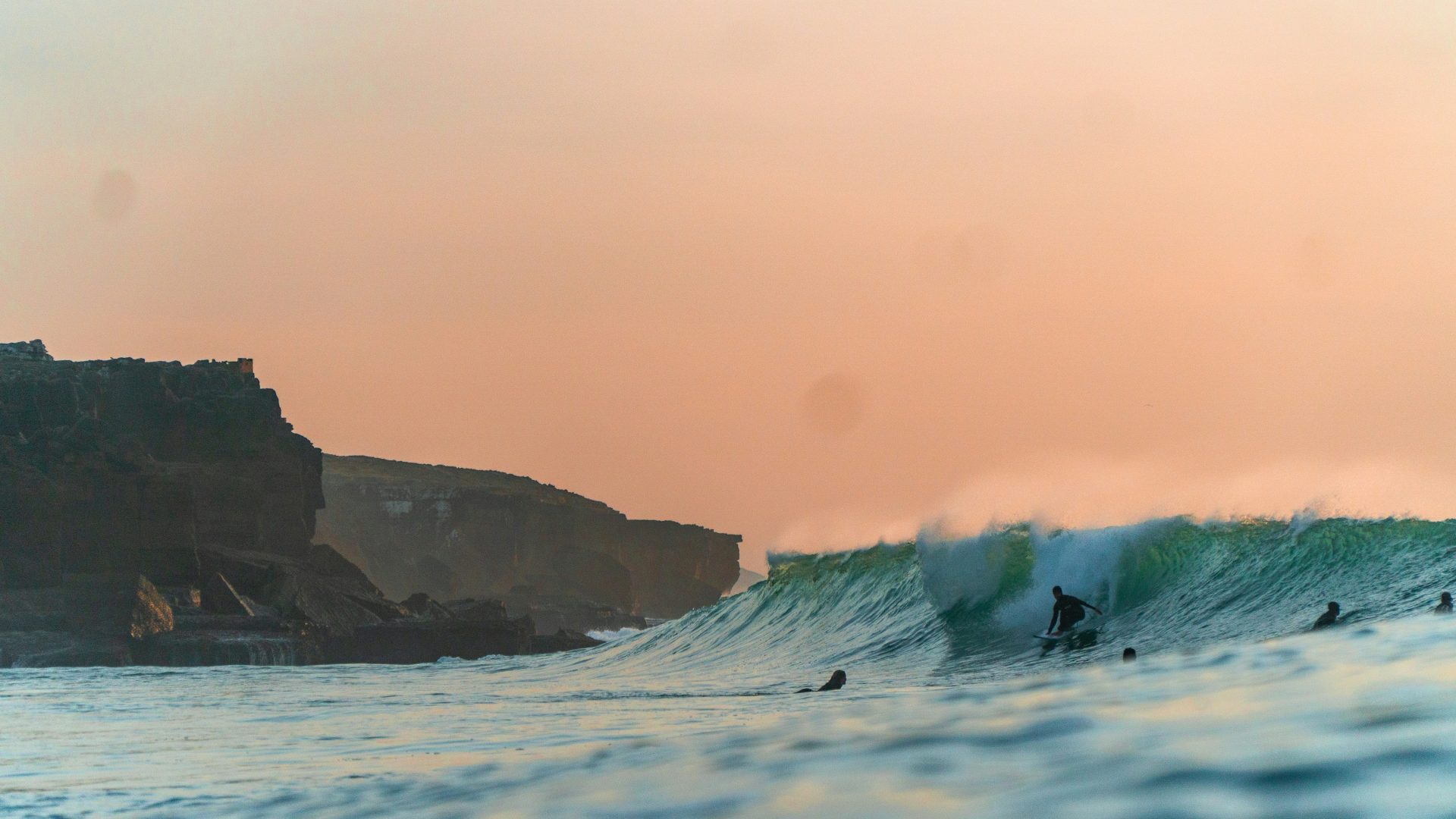
When Is Surfing Season in Portugal?
Ask a local surfer when surfing season is in Portugal and you’ll probably get a shrug and a smile. There are waves here all year round. Portugal’s long Atlantic coastline picks up swell in every month, and the Algarve, with beaches facing both west and south, is one of the few places in Europe where you can almost always find somewhere to paddle out.
That said, the surf changes a lot from one season to the next. Winter brings big, powerful swells that are best left to experienced surfers, while summer is gentler, warmer and far kinder to beginners. Autumn and spring sit somewhere in between, and for a lot of surfers, that’s the sweet spot.
Below, we’ve broken down what to expect from surfing in Portugal season by season, where to head in the Algarve, and when beginners should plan their trip.
The best time to surf in Portugal
If you want the best balance of good waves, warm water and quiet beaches, aim for September to November. Autumn swells are consistent, the sea is still warm from the summer, and the crowds have thinned out. If you’re learning, June to September is the easiest time, as the waves are smaller and the water is at its warmest.
Here’s a quick overview of the surfing seasons in Portugal:
- Autumn (September to November): Consistent swell, warm water and fewer people. The best all-round season.
- Winter (December to February): The biggest and most powerful waves of the year. Best for experienced surfers.
- Spring (March to May): Still plenty of swell, longer days and cooler water. Good for improvers.
- Summer (June to August): Smaller, gentler waves and the warmest water. Ideal for beginners and families.
Surfing in Portugal season by season
Autumn (September to November)
Autumn is when a lot of surfers start packing their boards. The first proper Atlantic storms of the year begin sending long, well-spaced swells towards the coast, but the weather on land is often still settled, with plenty of sunshine and light winds in the mornings.
In the Algarve, the sea holds on to its summer warmth well into October, so you’ll often get away with a 3/2mm wetsuit until late in the month. The summer crowds have gone, the surf schools are quieter and you can usually find a peak to yourself without too much effort. If you only have one surf trip a year, this is the time we’d recommend.
Winter (December to February)
Winter is big-wave season in Portugal. This is when the famous waves of Nazaré, further up the coast, reach the kind of heights that make headlines around the world, and when the exposed beaches on the Algarve’s west coast can get very big and very powerful.
Winter isn’t off limits for everyone else, though. When the west coast is too big, the south-facing beaches around Sagres and Lagos are often sheltered and much more manageable. Days are shorter and you’ll need a thicker 4/3mm wetsuit, but the sunshine is surprisingly reliable and the line-ups are at their quietest. For confident intermediate and advanced surfers, it can be the most rewarding time of year. If you’re tempted by a winter escape, our guide to winter water sports in the Algarve has a few more ideas.
Spring (March to May)
Spring is a great all-rounder. The winter storms ease off, but there’s still plenty of swell about, and the days get noticeably longer, giving you more time in the water. The sea is at its coolest early in the season, usually around 15°C to 16°C, so keep the 4/3mm handy until May.
It’s also a good time for improvers who have had a few lessons and want to push on. The waves are often a step up from summer without the intensity of mid-winter, and the beaches and roads are still quiet before the summer rush.
Summer (June to August)
Summer is peak holiday season in Portugal, and while it isn’t the time for big waves, it’s perfect for learning. Swells are smaller and more forgiving, the water reaches around 20°C to 22°C on the south coast in August, and the long, warm evenings make it easy to fit in a sunset session.
The west coast still picks up waves on most days, but the wind tends to build in the afternoons, so early mornings are usually best. The water on the west coast also stays a little cooler, so a 3/2mm wetsuit is still a good idea. The south coast is often flat in summer, which is good news if you’re travelling with family and want calm water for swimming. Do expect busier beaches in July and August, especially at the well-known surf spots.
When is the best time to surf in Portugal for beginners?
If you’re learning, the best time for surfing in Portugal is from June to September. Smaller waves, warmer water and plenty of surf schools running daily lessons make it much less daunting when you’re trying to stand up for the first time.
Early autumn is a good second choice. September in particular tends to have small to medium waves on many days, the sea is at its warmest, and the beaches are much quieter once the school holidays are over.
A few tips for beginners surfing in Portugal:
- Book lessons for your first few sessions. A good instructor will pick the right beach for the day’s conditions, which can change quickly on this coast.
- Start on a soft-top board. They’re more stable and much more forgiving when you fall off (and you will).
- Surf where the lifeguards are. Most Algarve beaches have lifeguards during the summer bathing season, so stick to the flagged areas.
- Pay attention to the tides. Many Algarve beaches work best at a particular stage of the tide, and your surf school or a local surf report will tell you when to go.
Praia do Amado and Meia Praia are two of our favourite spots for first-timers, and you can read more about both in our guide to the best beaches for surfing in the Algarve.
Surfing in the Algarve: where to go and when
The Algarve has two very different coastlines, and knowing which one to head for is half the battle.
The west coast
From Odeceixe down to Sagres, the west coast faces straight into the Atlantic and picks up swell almost every day of the year. Beaches like Arrifana, Amado, Bordeira and Cordoama are at their best from autumn through to spring, and as they sit within a protected natural park, the scenery is every bit as wild as the waves.
Sagres
Sagres sits right on the corner where the west and south coasts meet, which makes it one of the most reliable places to surf in Portugal. If the wind or swell is wrong on one side, you can usually drive a few minutes to a beach facing the other way. Tonel and Beliche are popular in the cooler months, while Mareta, on the south side, comes to life when the big winter swells roll in.
The south coast
East of Sagres, the south coast is much more sheltered and needs a big Atlantic swell or a southerly wind to get going, which usually happens in winter. When it does, spots like Meia Praia in Lagos and Praia da Rocha in Portimão can have fun, uncrowded waves. In summer, these beaches are generally calm and better suited to swimming and paddleboarding.
For a closer look at individual breaks, our guide to the best surfing spots in the Algarve is a good place to start.
Surfing in the rest of Portugal
If you’re planning a longer trip, the rest of Portugal’s coastline has plenty to offer too. Ericeira, north of Lisbon, became Europe’s first World Surfing Reserve in 2011 and is known for its quality reef breaks. Peniche, a little further up the coast, is home to Supertubos, a fast, hollow beach break that hosts a stop on the World Surf League Championship Tour.
And then there’s Nazaré, where the giant waves at Praia do Norte draw big-wave surfers from all over the world, usually between October and March. Unless you’re one of them, Nazaré is best enjoyed from the clifftop by the lighthouse.
Algarve sea temperature and what to wear
Here’s a rough guide to sea temperatures in the Algarve through the year, and the wetsuit you’ll need:
- January to March: Around 15°C to 16°C. A 4/3mm wetsuit, plus boots if you feel the cold.
- April to June: Around 16°C to 19°C. A 4/3mm early on, moving to a 3/2mm as summer arrives.
- July to September: Around 19°C to 22°C. A 3/2mm wetsuit, or a shorty on the warmest days.
- October to December: Around 16°C to 20°C. A 3/2mm in October, switching back to a 4/3mm by December.
The west coast usually runs a degree or two cooler than the south, especially in summer. For a month-by-month look at the weather on land, take a look at our guide to the temperature in the Algarve throughout the year.
Surfing in Portugal FAQs
When is surfing season in Portugal?
You can surf in Portugal all year round. Autumn (September to November) is generally considered the best season, winter (December to February) brings the biggest waves, and summer (June to August) has the smallest, most beginner-friendly conditions.
Is Portugal good for beginner surfers?
Yes. Portugal is one of the most popular places in Europe to learn to surf, with lots of surf schools, sandy beach breaks and mild weather. The Algarve’s west coast and the beaches around Sagres and Lagos are especially good for beginners in summer and early autumn.
What is the best month to surf in the Algarve?
October is hard to beat, with consistent swell, water that’s still warm from the summer and quiet beaches. For beginners, September is a great choice, with smaller waves and some of the warmest sea temperatures of the year.
Can you surf in Portugal in winter?
Yes, and for experienced surfers it’s one of the best times to go, with bigger waves and quieter line-ups. You’ll need a 4/3mm wetsuit, and beginners should stick to sheltered, south-facing beaches with a qualified instructor.
Stay in luxury on your Portugal surf trip
Whatever time of year you’re planning to surf, a comfortable base makes all the difference. There’s nothing quite like coming back from a session to a private pool, a hot shower and a sunny terrace.
Our luxury villas for surfing are picked with surfers in mind, and our Western Algarve properties put you within easy reach of the best breaks. Our concierge team can help with everything from finding a surf instructor to arranging a private chef for when you’re too tired to cook after a long day in the water.
Get in touch and we’ll help you plan your trip around the waves.